

Clovis Unified’s Teacher Salary Increase
The CUSD Employee Compensation Committee has presented a recommendation that teachers will get a 5% increase for next year, 2026-27. Those groups who have collective bargaining may not get the increase at the beginning of next year, but some will. What’s the difference?
Also, what is the Difference Between the process of the ECC and real bargaining:? For decades, Clovis Unified has utilized a committee to make recommendations to the board about our wages. Fortunately, ACE now knows from experience what it means to bargain a Union contract, because we’ve bargained three of them.
Let’s do a quick review:
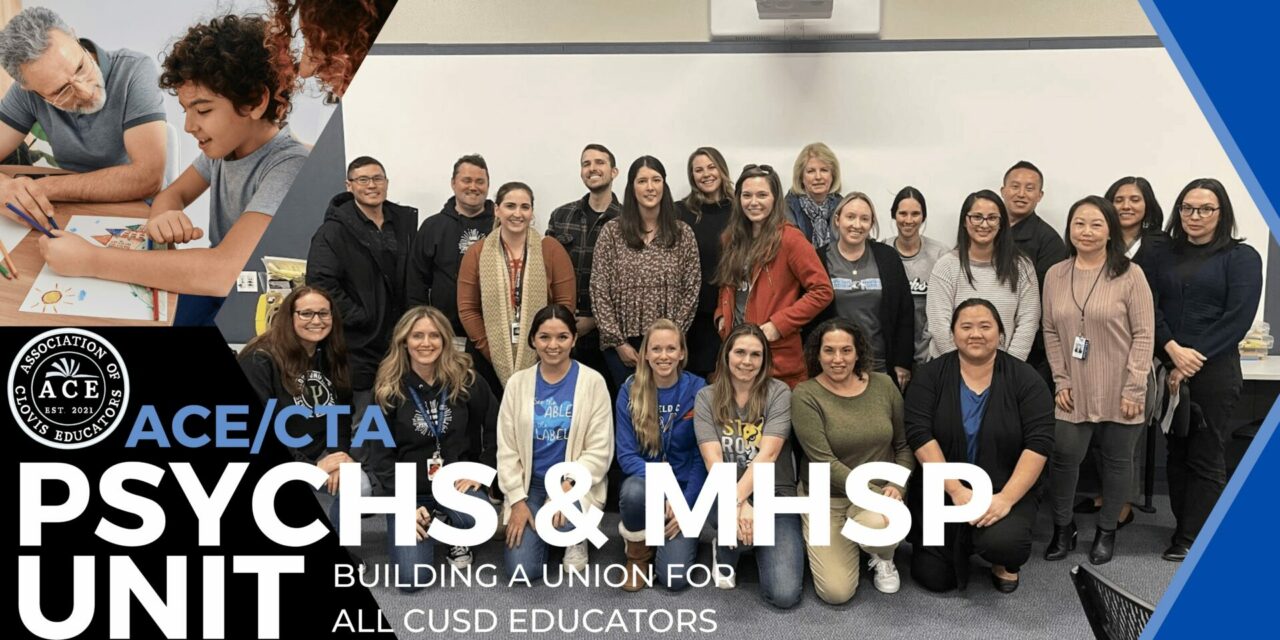
ACE School Psychologists and MHSPs:
The Psychologists and MHSPs bargained the first ever union contract for certificated educators in Clovis Unified back in 2021 and 2022 and we’ve now negotiated a re-opener each year and a three year successor agreement. We made significant improvements to our pay and staffing and are continuing to work on increasing support for academic and social/emotional needs, and how we can work with our fellow Clovis Educators to make sure we’re supporting each student effectively and efficiently. Psychologists have proposed to receive 5% for next year.
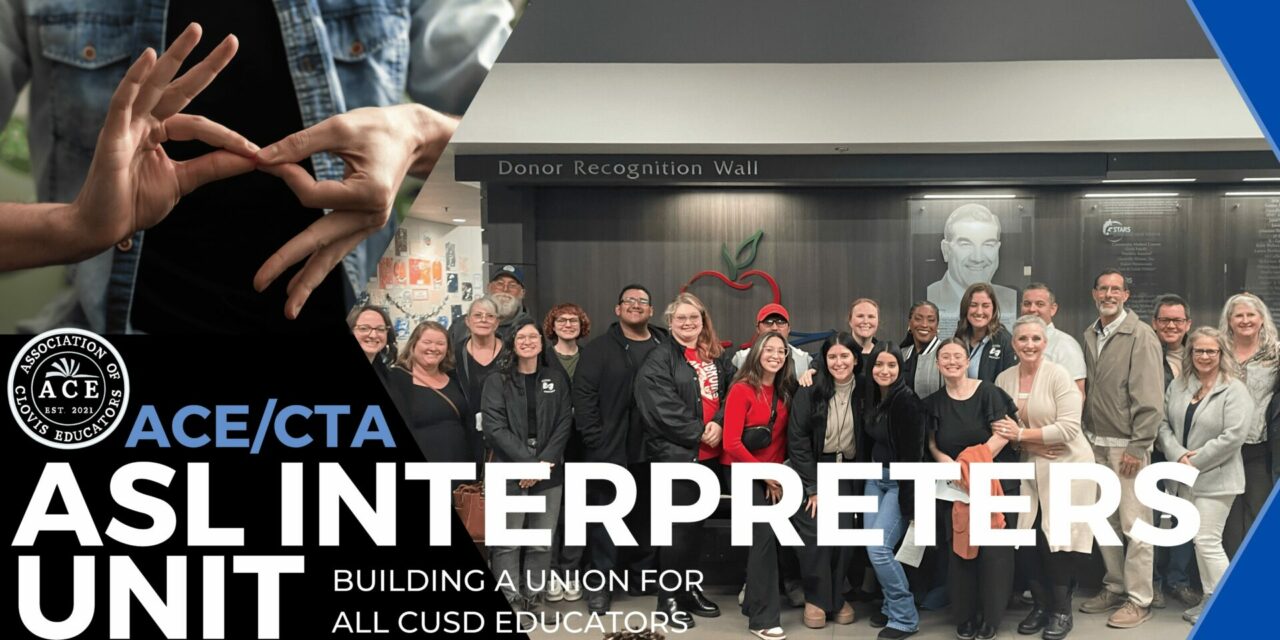
ACE ASL Interpreters and Signing Aides:
The Sign Language unit has been bargaining for a year and a half and has been able to address some of the original concerns, but are also trying to help our district admin understand that as a district we are out of compliance when it comes to providing the Deaf and Hard of Hearing students in Clovis with the fair break they deserve. We have gone through multiple sessions of mediation to try to make it clear that we are desperately understaffed and that the only way forward is to attract and retain qualified professionals.
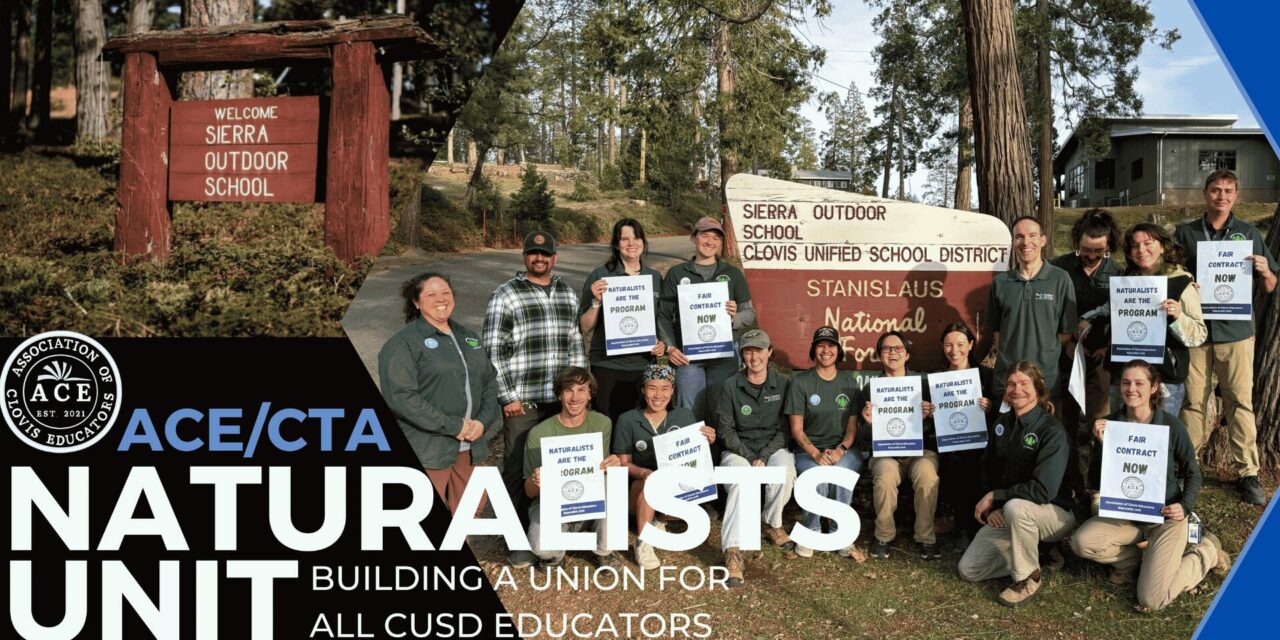
ACE Sierra Outdoor School Naturalists:
Our Sierra Outdoor School (SOS) Naturalists finalized their first contract this year and found solutions to long-standing issues, such as permanent reliance on substitutes and student and staff safety. Our first-ever SOS safety guidelines have put a cap on class sizes to minimize the frequency of Naturalists injuring themselves trying to keep large classes of students safe. They also now get stipends for their Commercial Drivers License for driving the busses and stipends for our specializations in activities like caring for our large birds of prey and safely managing the high ropes activities. They’ve already agreed to the 5% increase.
Educator associations typically extend contract negotiations into the new school year to gather complete budget data and state information for informed decision-making. This timeline ensures a level playing field so negotiators know exactly what a district can afford.
At the ECC, administration dominates salary decisions by controlling meeting agendas and outnumbering staff, and dismissing requests for actual financial data. ACE proposed a 6% salary increase based on research. ICUE counter-proposed 4%. What employee representative would ask for a lower wage increase? One that is employer-dominated.
So, Is 5% a good increase for Clovis Unified?
The FACTS:
The State Budget:
We know that the Cost Of Living Adjustment (COLA) for state funding next year is currently predicted to be a combined 4.31%. On top of that, the budget also estimates that we will get a $17m increase to Special Education funding and new monies for Student Support, Professional Development and Learning Recovery.
What about other districts’ salaries?
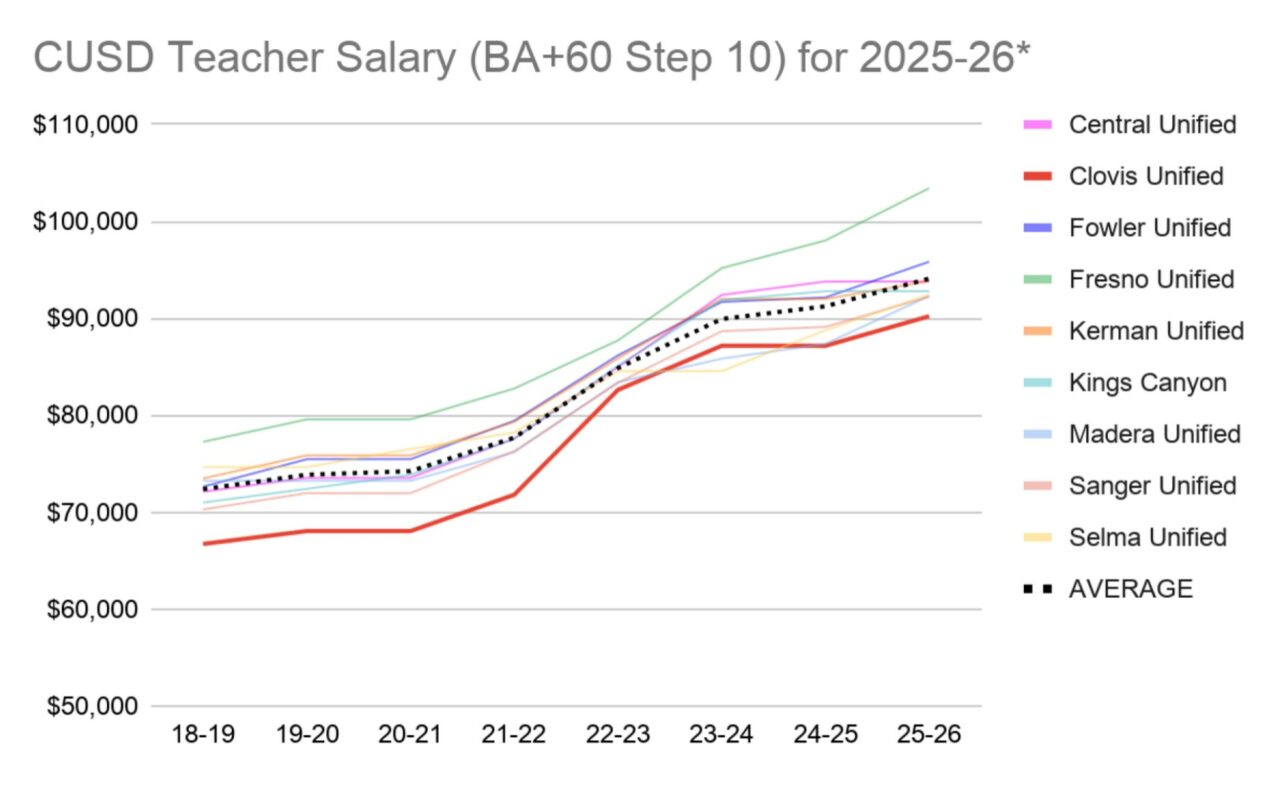
The real questions for our Salaries: Does it allow us to cover the increases in cost-of-living that we experience, and does it allow us to attract and retain the great educators that our students deserve.
We saw a significant increase in 2022 when the Market Study was put into effect. How have we done since then?